
When Cinema Found Its Conscience—and Its Crown Jewels
There are evenings in Hollywood when the champagne flows a little sweeter, when the flashbulbs capture something more than mere fashion moments, when the industry doesn’t just celebrate itself—it reinvents itself. Sunday, January 11, 2026, at The Beverly Hilton, was precisely such an evening.
The 83rd Annual Golden Globes, that delicious amuse-bouche before the Academy Awards feast, delivered a masterclass in how awards shows should be done. With Nikki Glaser commanding the stage for her second consecutive year as host—her monologue a razor-sharp meditation on Hollywood’s absurdities that had the room alternating between gasps and applause—the night set a tone that was equal parts irreverent and momentous.
The New Guard Ascends
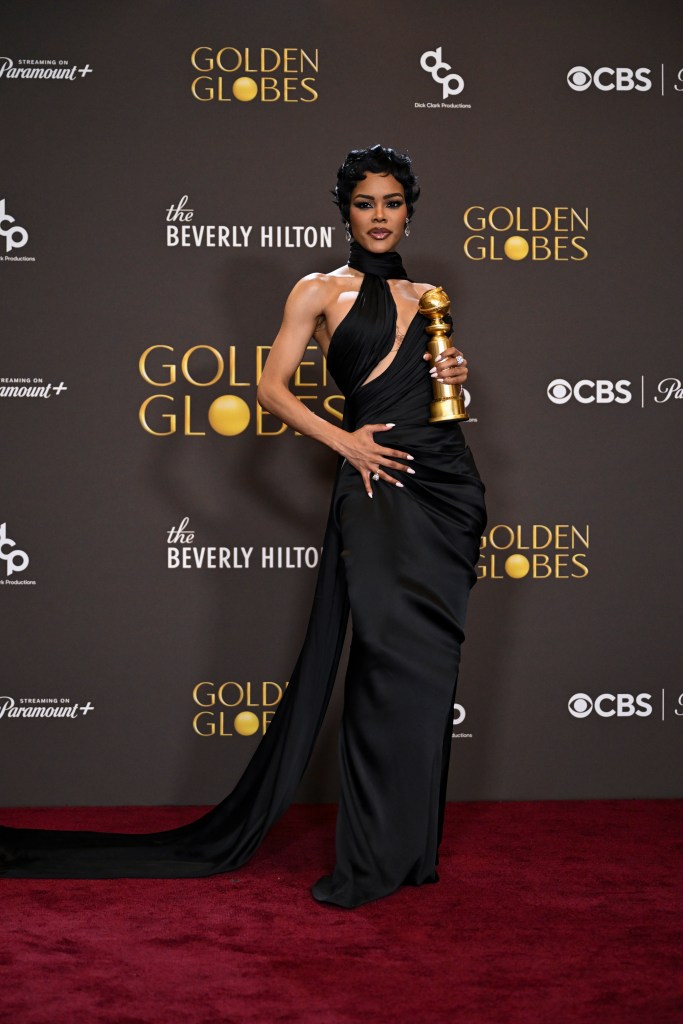
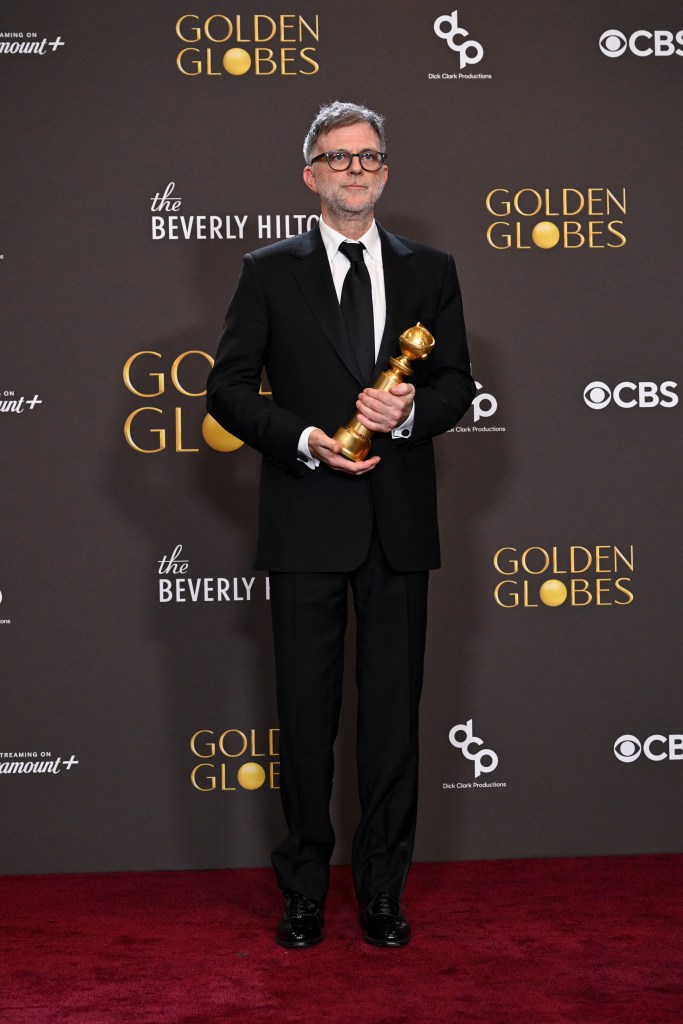
Let’s address the elephant—or rather, the golden statue—in the room: Paul Thomas Anderson’s One Battle After Another dominated with four wins, including Best Motion Picture – Musical or Comedy, Best Director, and Best Screenplay. But this wasn’t merely Anderson collecting hardware. This was cinema reclaiming its political soul, wrapped in the aesthetics of action filmmaking. With nine nominations leading into the evening, the Warner Bros. release proved that audiences still crave substance alongside spectacle.
Teyana Taylor’s Best Supporting Actress win for the film provided one of the night’s most electric moments. “To my Brown sisters and little brown girls watching tonight, our softness is not a liability,” she declared, her voice carrying the weight of generations. In a ballroom filled with calculated charm, Taylor’s authenticity cut through like a spotlight through fog.
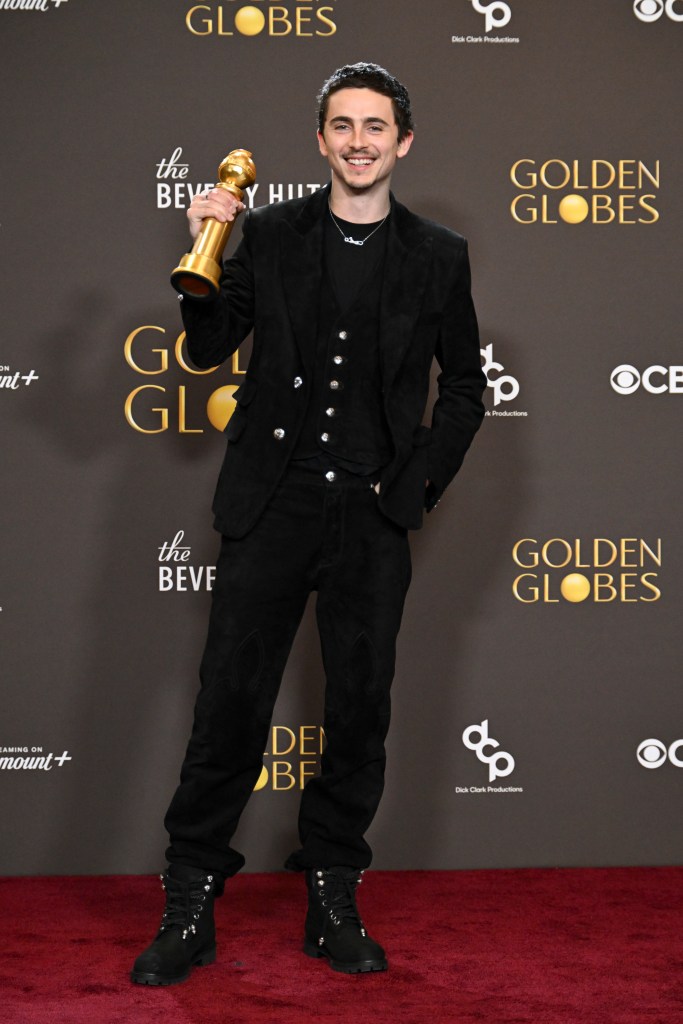
And then there was Timothée Chalamet, accepting Best Actor in a Musical or Comedy for Marty Supreme, looking every bit the leading man who understands that stardom is as much about cultural moment as it is about craft. His win cements what we’ve long known: Chalamet isn’t just an actor of his generation—he’s redefining what movie stardom means.
Drama’s Quiet Triumph
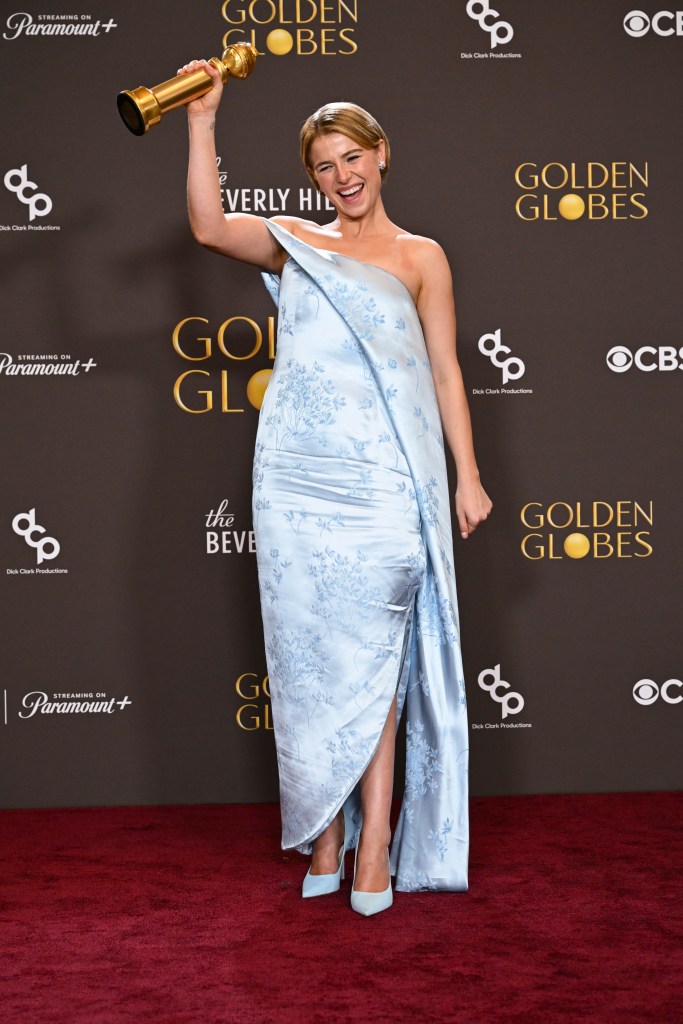
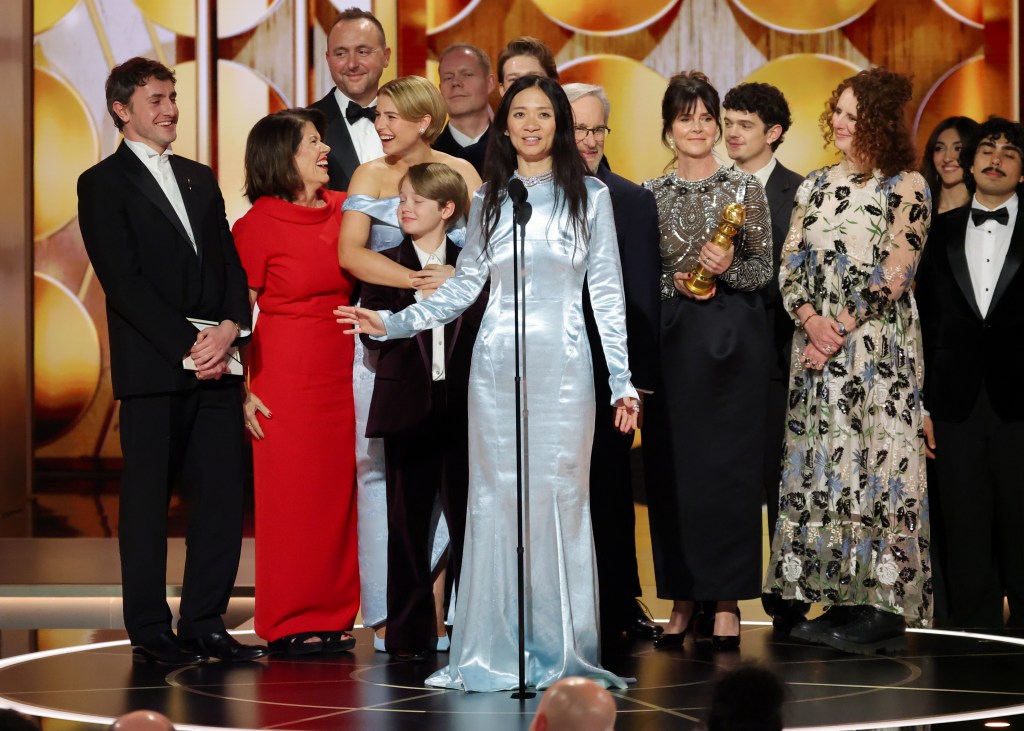
While Anderson’s film commanded attention, Chloé Zhao’s Hamnet—that exquisite meditation on Shakespeare, grief, and genius—claimed Best Motion Picture – Drama. Jessie Buckley’s win for Best Actress was thoroughly deserved, her performance a masterclass in controlled devastation. Standing beside Steven Spielberg (yes, that Spielberg produced it), Zhao’s Focus Features film reminded us that sometimes the quietest films speak loudest.
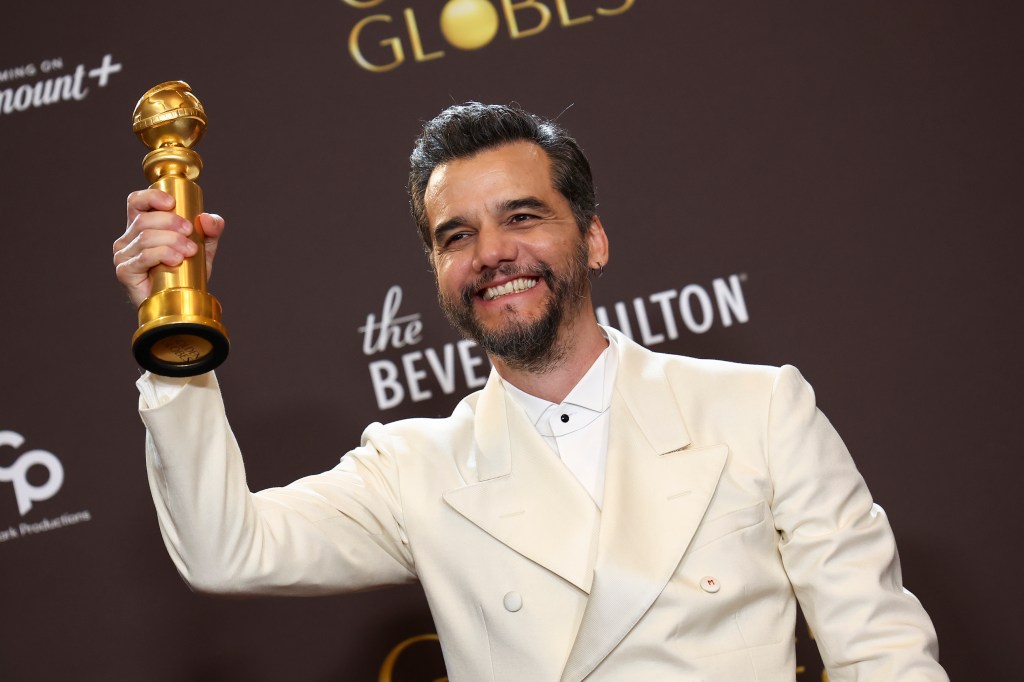
Wagner Moura’s surprise win for Best Actor in a Drama for The Secret Agent felt like the Globes thumbing their nose at the SAG-AFTRA nominations, which inexplicably shut out foreign film performances. Moura, the first Brazilian actor to claim a Globe, dedicated his win to “the ones that are sticking with their values in difficult moments”—a sentiment that resonated through a room increasingly aware of cinema’s global reach.
Television’s Bold New Chapter
On the small screen—though calling anything Netflix produces “small” feels quaint—Adolescence swept its categories with an almost unprecedented four-for-four victory rate. The British crime drama that has sparked policy conversations across the UK took Best Limited Series, with Stephen Graham, Owen Cooper, and Erin Doherty all winning acting prizes.
Cooper’s win, at just 16, made him the youngest supporting actor winner in Golden Globes history. “I was the only boy in drama class. It was embarrassing, but I got through it,” he admitted during his acceptance speech, his vulnerability a sharp contrast to Hollywood’s usual swagger. This is what breakthrough performances look like in 2026: raw, real, and utterly riveting.
Meanwhile, Jean Smart’s third Globe for Hacks prompted her to quip, “I’m a greedy bitch,” delivering the kind of self-aware humor that defines great comedy. Seth Rogen’s win for The Studio confirmed what Apple TV+ already knew: Hollywood loves nothing more than watching itself through a funhouse mirror.
The Pop Culture Phenomenon
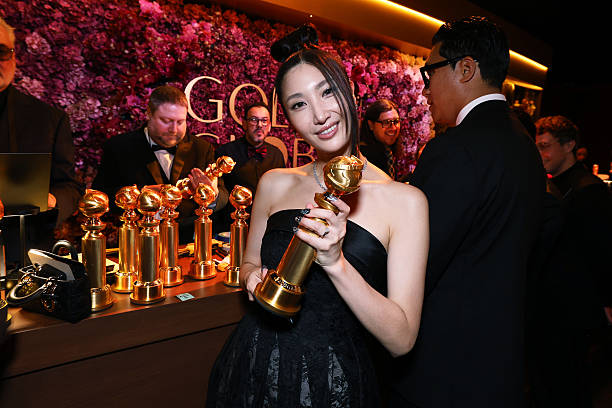
And then there’s KPop Demon Hunters—the Netflix animated sensation that conquered 2025’s streaming charts and refused to be ignored come awards season. The film claimed Best Animated Feature and Best Original Song for “Golden,” its anthemic track that topped charts for eight weeks. When songwriter EJAE accepted the award, she spoke of being rejected as a K-pop trainee for a decade before finding her voice through songwriting. “It’s a dream come true to be part of a song that is helping other girls, other boys, and everyone from all ages get through their hardship,” she said, her words a reminder that animation isn’t just for children—it’s for anyone who’s ever felt like they didn’t belong.
The film’s success signals a seismic shift: global pop culture, East meets West, animation as prestige, music as narrative. KPop Demon Hunters didn’t just win awards—it announced a new paradigm.
Breaking New Ground
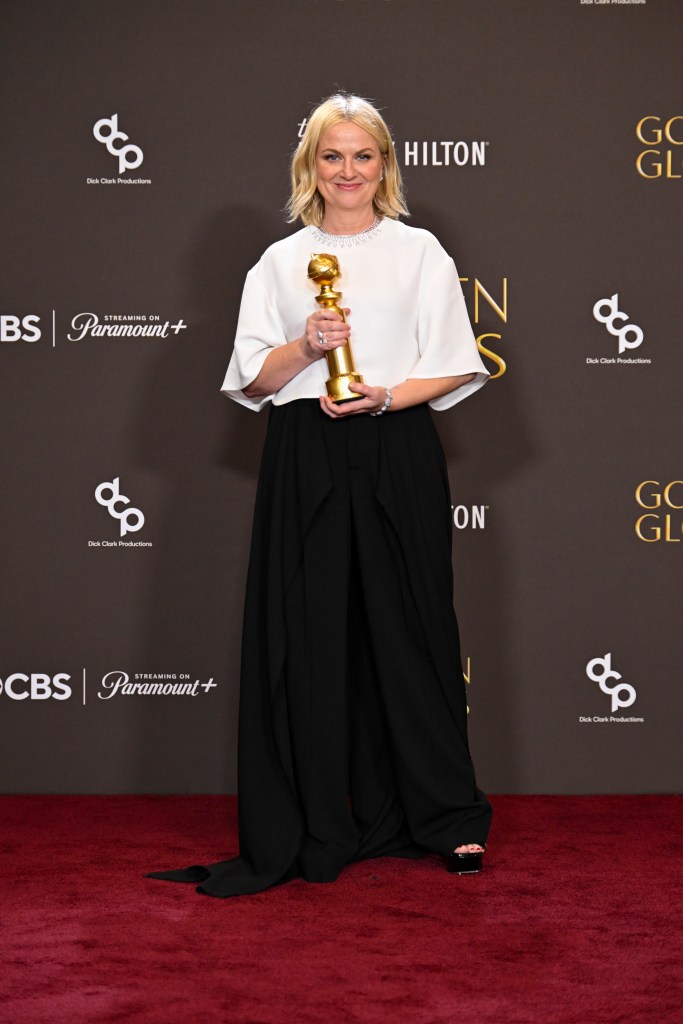
The Globes also made history by honoring podcasts for the first time, with Amy Poehler’s Good Hang claiming the inaugural award. In typical Poehler fashion, she quipped, “I don’t know about awards shows, but when they get it right, it makes sense.” The category’s introduction acknowledges what we’ve known for years: storytelling has escaped the boundaries of traditional media, and awards must evolve accordingly.
Netflix led all platforms with seven statuettes, further cementing its position as the industry’s dominant force—particularly poignant as it prepares for its acquisition of Warner Bros., a deal that will reshape Hollywood’s landscape in ways we’re only beginning to comprehend.
The Legends Honored
Before the main ceremony, the Golden Eve presentation saw Helen Mirren receive the Cecil B. DeMille Award—presented by Harrison Ford, naturally—while Sarah Jessica Parker claimed the Carol Burnett Award. These moments served as elegant reminders that Hollywood, for all its forward momentum, still reveres its icons. Mirren and Parker represent different eras of entertainment excellence, yet both embody the same commitment to craft that makes this industry worth celebrating.
What It All Means
As the champagne-soaked afterparties stretched into the Beverly Hills dawn—with Adolescence stars Graham, Cooper, and Doherty clutching their trophies at Spago, and Taylor holding court at Chateau Marmont—one thing became clear: the 83rd Golden Globes wasn’t just Hollywood’s party of the year. It was a declaration of intent.
The winners reflect an industry grappling with its identity: global yet specific, political yet entertaining, reverential toward the past while hurtling toward the future. From Anderson’s satire to Zhao’s Shakespeare, from Adolescence‘s gritty realism to KPop Demon Hunters‘ fantastical animation, this year’s Globes honored work that refuses to be easily categorized.
Glaser’s monologue set the tone perfectly—Hollywood at its best is both self-critical and self-celebrating, aware of its absurdities while committed to its artistry. As we hurtle toward March’s Academy Awards, the Golden Globes have drawn the roadmap: expect the unexpected, demand excellence, and never underestimate the power of a well-told story, no matter the medium.
The golden statues have been distributed, but the real prize—cultural relevance in an increasingly fragmented media landscape—still hangs in the balance. Sunday night suggested that Hollywood might just be figuring out how to claim it.
For more show highlights and BTS moments, follow along on Instagram (@GoldenGlobes) and X (@GoldenGlobes)

Leave a comment