
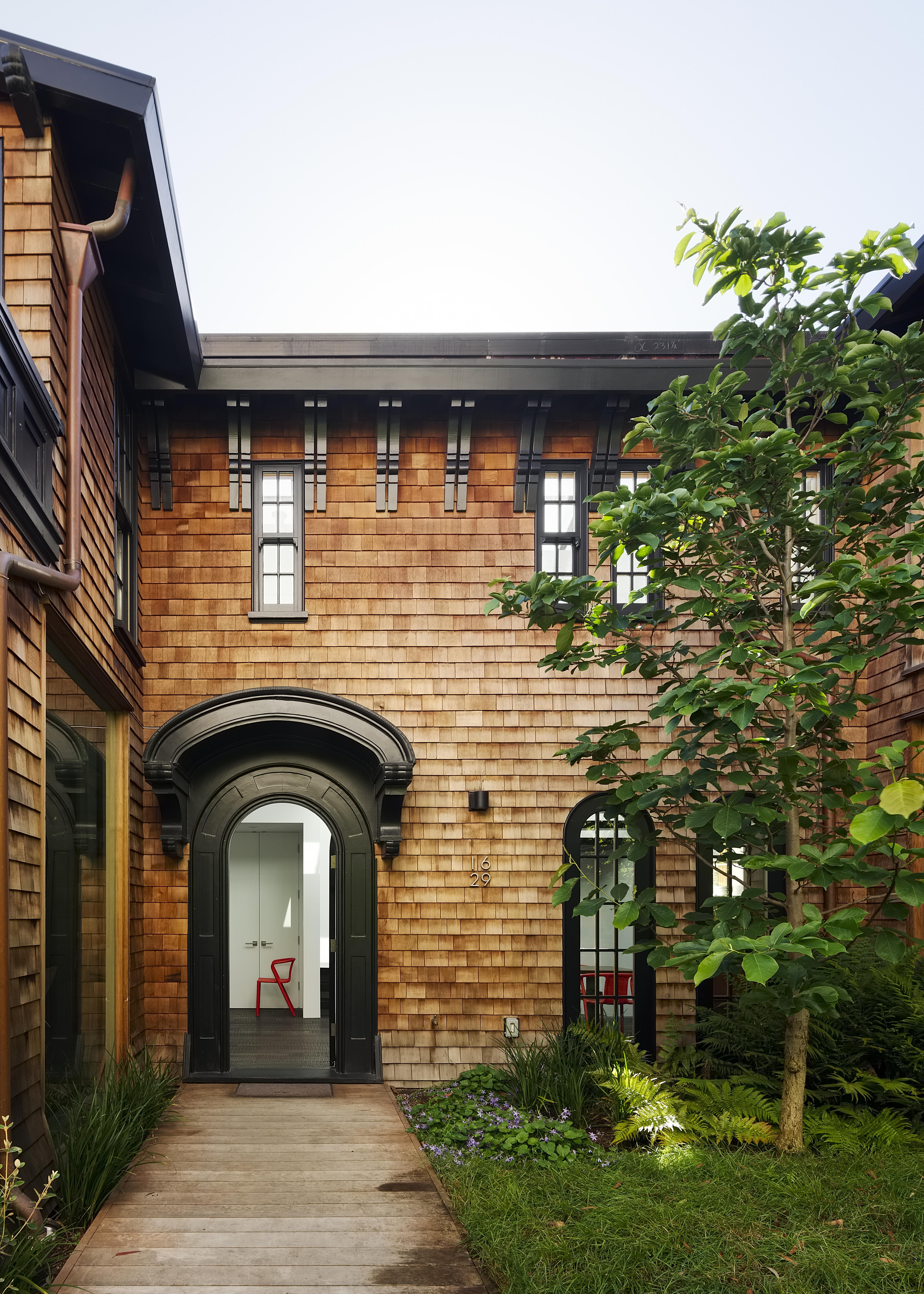
Cow Hollow, San Francisco — Mark English Architects
Photo credit: Joe Fletcher


There are houses that merely shelter, and then there are houses that speak. The 1917 cottage nestled in Cow Hollow — one of San Francisco’s most quietly distinguished neighborhoods — belongs unmistakably to the latter category. Designed originally by architect Elizabeth Austin, a pioneering figure in a profession that rarely welcomed women in the early twentieth century, the home carried within its walls more than a century of Bay Area life, aspiration, and craft. When Mark English Architects was entrusted with its transformation, the mandate was as delicate as it was exhilarating: to re-envision without erasing, to elevate without forgetting.
The Weight of 1917
Elizabeth Austin designed at a moment when San Francisco was still reconstructing its identity in the wake of the 1906 earthquake and fire. The cottages and bungalows that rose from those ash-grey years bore a particular earnestness — an architectural sincerity rooted in the Arts and Crafts ideals then sweeping the California coast. Austin’s contribution to Cow Hollow was modest in footprint but generous in spirit: low-pitched rooflines, honest woodwork, rooms scaled to human warmth rather than civic ambition. For over a century, the house stood as a quiet argument for the enduring value of the handmade and the considered.
To work on such a structure is to accept an obligation. Mark English Architects understood this from the first site visit.
The Vision: Continuity as Luxury
Under the direction of principal Mark English, the firm approached the project not as a renovation but as a conversation across time. The question was never what can we replace? but rather what has always wanted to exist here, and simply lacked the means?
The result is a residence of singular refinement — one where the bones of Austin’s original design are not merely preserved but celebrated, set in relief against interventions of quiet contemporary confidence. Original fir floors were restored to a warmth that no new material could replicate. Historic millwork was retained, cleaned, and subtly accentuated. Ceiling heights, where intervention was possible, were liberated from decades of accumulated insulation and drop ceilings, restoring a sense of breath and verticality that Austin had always intended.
New additions speak a complementary language — clean lines, natural materials, an instinct for light — without resorting to the jarring juxtapositions that lesser restorations so often produce. There is no seam here between old and new that announces itself with pride. Instead, the transitions are felt more than seen: a shift in the quality of light, a change in the grain of the stone, a doorway that opens onto something unexpected and quietly luminous.
Cow Hollow as Character
The neighborhood itself informed every decision. Cow Hollow — bounded by the bustle of Union Street and the breezy expanse of the Marina — carries a particular San Francisco character: residential without being suburban, storied without being precious. The streets are lined with Edwardian and Victorian facades that have learned, over generations, to live gracefully alongside one another despite their differences.
Mark English Architects honored this urban dialogue. The renovated cottage neither dominates its block nor retreats from it. From the street, the house presents itself with the same quiet confidence it has maintained for over a century — a presence earned rather than performed. It is only upon entering that the full scope of the transformation becomes apparent: a home reimagined for contemporary living without a single moment of apology for its age.
#adidas #hair #jewelry #luxuryfashion #LuxuryInteriors #LuxuryLifestyle Academy Awards architecture art Beauty blog books Celebrity Beauty Celebrity Style decor Entertainment europe Fashion film food football health Hollywood home home-decor hotels interior-design Lifestyle luxury Luxury Fashion luxury interiors music Music Industry news New York Fashion Week Oscars 2026 Philadelphia skin-care skincare Sports Street Style streetwear style travel wellness












Leave a Reply